










An underground fuel tank is the kind of purchase that looks simple on a quote and gets complicated in the ground. Once it’s buried, changing your mind is expensive, so the smartest decisions happen before anyone picks up a shovel.
Whether you run a farm, a trucking fleet, a municipal yard, or a neighborhood fuel station, the same handful of questions tend to separate smooth projects from costly ones. They cover capacity, materials, regulation, soil, monitoring, and who stands behind the work.
This guide walks through those questions in the order they usually come up. Treat it as a set of prompts for your conversations with suppliers, installers, and your local regulator.
Start With How the Fuel Will Be Used
Before you compare tank specifications, get clear on what the tank actually has to do. A fleet depot that fills twenty trucks every morning has very different needs from a farm topping up equipment at harvest, or a hospital storing diesel for backup generators.
Fuel type matters too. Gasoline, diesel, and blends such as biodiesel can each affect which materials and seals are compatible, so name the product up front rather than after the order is placed.
Write down who will fill the tank, who will dispense from it, and how often. That short note shapes nearly every later decision, and a good supplier will ask for it anyway.
How Much Capacity Do You Really Need?
Capacity is usually the first number people ask about and the one they most often get wrong. A tank that’s too small means frequent deliveries and the risk of running dry, while an oversized one ties up cash and leaves fuel sitting for months.
Start with your realistic monthly consumption, then look at how your supplier delivers. A site that gets a fuel truck every week can run leaner than a rural property that sees one drop a month.
Leave some room for growth, but not a lot. Remember that usable volume is lower than the nameplate figure, and that adding a second tank later is often easier than managing diesel that ages in a tank sized for a business you don’t have yet.
Steel, Fiberglass, or Double-Wall: Which Construction Fits?
Construction decides how well a tank resists corrosion and how it behaves over decades. The main choices are corrosion-protected steel, fiberglass-reinforced plastic, and composite designs, and many are now built with two walls instead of one.
Double-wall tanks add a monitored space between the inner and outer shells, which gives an early warning if either wall is breached. Steel depends on coatings and cathodic protection to hold up underground, while fiberglass doesn’t rust but needs careful handling and backfill during installation.
It helps to see how these choices play out in real products, so take a look at the buried tank configurations a manufacturer offers across capacities and wall types. Then ask which one suits your soil, your fuel, and your budget over the long run, not just on day one.
What Do Regulations and Permits Require?
In the United States, underground storage tanks fall under federal rules from the Environmental Protection Agency, and most states run their own programs on top of them. Local fire marshals and building departments often add requirements of their own.
At the federal level, the rules call for proper installation, protection against spills, overfills, and corrosion, release detection, and correct closure at the end of a tank’s life, as EPA’s guidance on preventing and detecting UST releases explains. Some small tanks may be exempt from parts of those rules, but local codes can still apply, so confirm before assuming.
Ask early about permits, operator training, financial responsibility, and inspection schedules. A tank bought before those answers are in can end up needing expensive changes later.
How Will Your Site and Soil Affect the Installation?
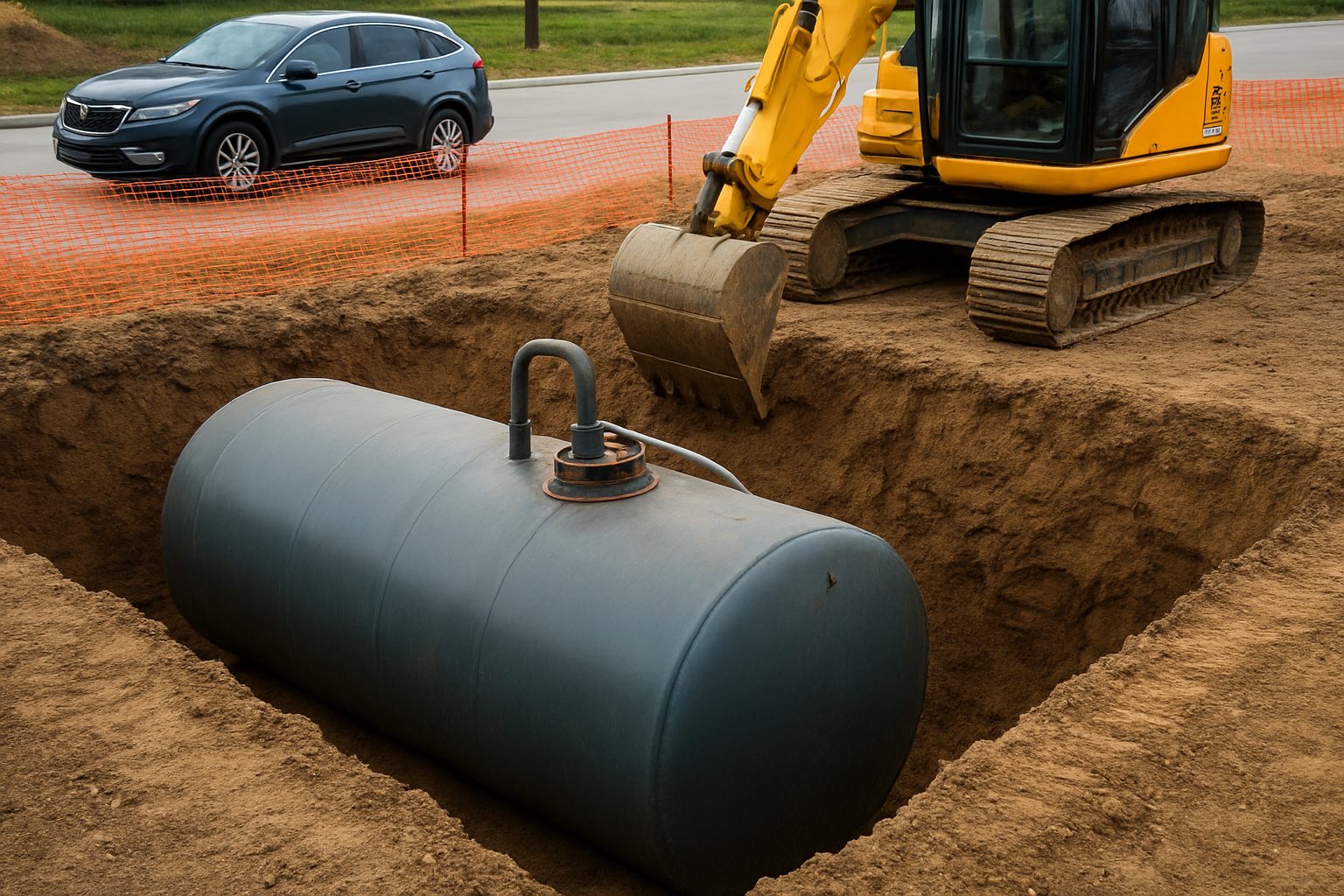
The ground shapes the project as much as the tank does. Soil type, groundwater depth, nearby buildings, drainage, and traffic loads all influence excavation, anchoring, and backfill.
A high water table can push an empty tank upward if it isn’t anchored properly. Corrosive or clay-heavy soils may call for extra protection, and a yard with heavy truck traffic may need a reinforced slab above the tank.
Installation guidance such as the Petroleum Equipment Institute’s recommended practices for underground liquid storage systems lays out the engineering and construction practices behind sound installation. Ask your installer whether they work to it, and request a site assessment before the quote is final.
What Leak Detection and Spill Protection Come With It?
Release prevention and detection are where modern tanks differ most from older systems. The rules call for spill protection, overfill protection, corrosion protection, and release detection, and many owners choose to go beyond the minimum.
Ask whether the system includes spill buckets, overfill alarms or shutoff devices, containment sumps under pumps and dispensers, and electronic monitoring of the space between tank walls. Automatic tank gauges and sensor consoles can log readings around the clock and flag trouble well before it turns into a cleanup.
Also ask what testing and record keeping you’ll be expected to handle afterward. Regular walkthrough inspections and equipment checks are part of running a UST under EPA’s rules, so a system that makes them routine saves effort for years.
Who Installs It, and Who Supports It Afterward?
Even a well-built tank can fail if it’s installed badly. Ask who will handle the excavation, tank setting, piping, and testing, and whether those technicians hold any certifications your state requires.
Get warranty terms in plain language: what’s covered, for how long, and what could void it. Ask about lead times and delivery logistics too, and find out who you call when an alarm goes off at six in the morning.
When you talk to suppliers, whether that’s a local distributor or a manufacturer like Tex-Tanks, put the same questions to each and compare the answers side by side. References from projects similar to yours are worth asking for as well.
Before You Sign the Purchase Order
A good underground tank project is mostly a matter of asking the right questions in the right order. Use case, capacity, construction, regulation, site conditions, monitoring, and installation support each shape how the tank performs once it’s in the ground.
If an answer feels vague, press for detail. Reputable suppliers and installers expect it, and the tank will be part of your operation for a long time.
Once the work is done, keep a single file with permits, test results, and warranty papers. It will save time at every inspection and make any future sale of the property much smoother.
Key Points
- Understanding how fuel will be used is crucial as it influences tank specifications and operational decisions.
- Accurately determining fuel tank capacity is essential to avoid frequent deliveries or excess fuel sitting unused.
- The construction material of the tank—whether steel, fiberglass, or double-wall—greatly affects its longevity and corrosion resistance.
- Regulations for underground storage tanks in the U.S. are set by the EPA and often require additional compliance with state and local codes.
- Site conditions such as soil type and groundwater levels significantly impact the installation process and may require special considerations.
- Effective leak detection and spill protection systems are vital for modern tanks, often including features like spill buckets and electronic monitoring.
